ONLINE WOMEN’S MAGAZINE
HEALTH
At 25, you can have a good job, a loving partner, close friends, your own apartment and plans for the future — and still wake up thinking: “What if I’m not actually living the life I want?”
At 25, you can have a good job, a loving partner, close friends, your own apartment and plans for the future — and still wake up thinking: “What if I’m not actually living the life I want?”
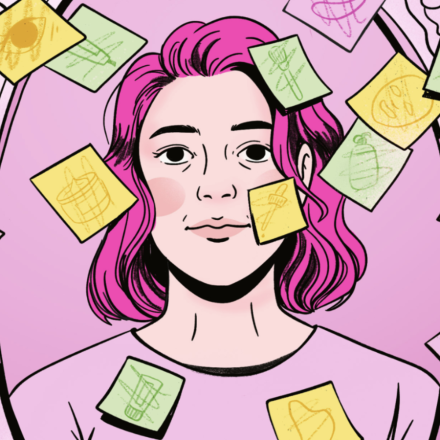
You scroll through social media: one friend has launched her own business, another has gotten married, a third has moved to another country, and a fourth has already bought a home. Meanwhile, you’re sitting with a cup of coffee, trying to figure out why your grand life plan still looks more like a list of questions.
Take a breath. Most likely, there’s nothing wrong with you.
A quarter-life crisis isn’t an official deadline for becoming an adult, and it certainly isn’t proof that you’re “falling behind.” It’s a period when old reference points stop working while your own are still taking shape.
Until your early twenties, life can feel a lot like following a route on a navigation app.
School, university, your first job, new friendships, independence. Everyone’s path is different, but the basic structure is clear: there’s a next step, there are approximate timelines, and there’s a sense that you’re moving forward.
Then, suddenly, you reach a point where nobody tells you what comes next.
There is no universal “next level.” You have to decide where to live, who to build a relationship with, what career to pursue, whether you want children, whether a career matters to you, whether you should move somewhere new or stay where you are.
And the hardest part is that, for the first time, you really have to live with the consequences of your own decisions.
That’s where the anxious question appears: “What if I make the wrong choice?”
It used to be easier to convince yourself that if you chose the right profession, worked hard and saved money, life would eventually become stable.
Today, that formula doesn’t always work.
Economic shifts, global events, technological breakthroughs and the rapid development of artificial intelligence are forcing us to constantly rethink our plans. A career that looks promising today may change beyond recognition tomorrow. Skills that were a competitive advantage yesterday can quickly become basic requirements.
As a result, uncertainty is no longer a brief period between two decisions.
It becomes part of life itself.
And the challenge for a modern 25-year-old woman isn’t to find a magic button that makes the future predictable. It’s to learn how to feel confident enough even when there are no guarantees.
There is one particularly toxic idea: that life supposedly follows a correct schedule.
By 25, you should know what career you want. By 27, you should meet “the one.” By 30, you should get married, buy a home, build a career, start traveling, get a dog — and preferably launch a business too.
It sounds absurd, but that’s exactly how many people unconsciously measure their lives.
The problem is that this schedule doesn’t exist.
Some people know exactly what they want to do for the next ten years at 24. Others discover the career they truly love at 29. Some start families at 23, while others reach 35 before realizing they don’t want to follow a traditional life path at all.
All of these choices can be perfectly normal.
Your life isn’t late simply because it doesn’t look like someone else’s.
The one thing that has changed dramatically is our ability to see hundreds of other people’s lives every single day.
You open Instagram or TikTok and, within minutes, find out who got engaged, who bought an apartment, who quit their office job and moved to Bali, who launched a brand and who is already raising two children.
Then you look at your own kitchen, your bank account and your list of unfinished tasks.
And suddenly, it feels as if everyone around you is moving forward faster.
But there’s one small detail our brains love to ignore: you’re comparing your entire life with someone else’s highlight reel.
You know about your doubts, disappointing dates, fears, financial problems, mistakes and sleepless nights. When it comes to someone else’s life, you usually see only a handful of its best moments.
That’s an unfair competition before it has even begun.
Modern culture loves the word “purpose.”
We’re encouraged to believe that somewhere out there is one perfect career, one right city, one ideal relationship and one ultimate version of ourselves that we urgently need to discover.
But growing up doesn’t work that way.
You don’t stumble across a finished version of yourself somewhere between a coffee shop and a bookstore.
You gradually create yourself through experience.
Through a job you didn’t like. Through a relationship that ended. Through a move that turned out to be a mistake. Through a hobby that unexpectedly became a career. Through decisions that once seemed right but later changed.
Identity isn’t a finished product. It’s a process.
So changing your plans doesn’t mean you don’t know yourself. Sometimes it means the opposite: you’ve finally started listening to yourself.
The worst thing you can do during a period of uncertainty is demand immediate clarity from yourself.
“I should know by now.”
“I need to make up my mind.”
“I have to stop being afraid.”
“Everyone else has figured it out, but I haven’t.”
Thoughts like these only increase the pressure.
A much healthier approach is to see this period as a kind of renovation of your internal system of coordinates.
The old rules no longer fit. The new ones haven’t been established yet. It’s uncomfortable, but this is exactly the space where you can finally ask yourself questions you simply didn’t have time for before.
What do I actually want? What truly matters to me? Which decisions come from my own desires, and which are driven by the fear of falling behind?
You don’t need to figure out your entire life in one evening. Start smaller.
1. Separate facts from anxiety.
When it feels like “everything is falling apart,” write down exactly what is happening. No predictions and no catastrophic scenarios. You may discover that the real problem is much smaller than the picture of the future your anxiety has created.
2. Temporarily switch off other people’s reference points.
Not forever. Just for a few days, remove accounts from your feed that make you want to urgently change your entire life.
Sometimes the problem isn’t a lack of motivation. It’s that you’re being exposed to too many other people’s versions of how life should look.
3. Plan the next step, not your entire life.
You don’t have to know where you’ll be at 35. It’s much more useful to understand what you can do over the next three months.
A course. A new skill. A job interview. A trip. A conversation. Therapy. A career change. Or, on the contrary, giving yourself permission not to make any dramatic changes at all.
4. Leave room for mistakes.
Adult life doesn’t require you to make flawless decisions. It requires you to know how to adjust your course.
You can change careers. Move back home. End a relationship. Start a new one. Change your mind about children, your career or the city you want to live in.
Changing your decision isn’t always failure. Sometimes it’s simply new information about yourself.
Feeling anxious from time to time is a normal response to major changes. But if anxiety becomes a constant background noise that makes it difficult to sleep, work, build relationships or simply enjoy everyday life, you don’t have to force yourself to “pull it together.”
Talking to a therapist can help you understand where real circumstances end and fears, imposed expectations and internal demands begin.
Therapy doesn’t provide a ready-made instruction manual for “how to live the next ten years correctly.” And that may actually be a good thing.
Its purpose can be something entirely different: helping you hear your own voice among the dozens of voices telling you who you are supposed to be.
There’s a paradox that can be difficult to accept when you’re young: uncertainty doesn’t always mean you’re lost.
Sometimes it means you’ve stopped following a route that someone else mapped out for you.
Maybe you still don’t know where you’ll live five years from now. Maybe you’re unsure whether you’ll stay in your current profession. Maybe you don’t know if you want marriage. Maybe you’re not sure whether you need a big house, your own business or a life in another country.
And you know what?
You don’t have to know today.
Your job at 25 isn’t to win an imaginary race against everyone your age. It isn’t to assemble a complete “adult life package” by a certain birthday. And it certainly isn’t to prove to Instagram that you have everything under control.
Your job is to gradually figure out what kind of life is truly yours.
Without someone else’s timeline. Without constant comparison. Without the pressure to make one perfect decision for the rest of your life.
Because growing up isn’t the moment when you finally get all the answers.
It’s the moment when you stop being afraid that you’re supposed to know them all.
Are you a man?
Visit MEN'S CULT