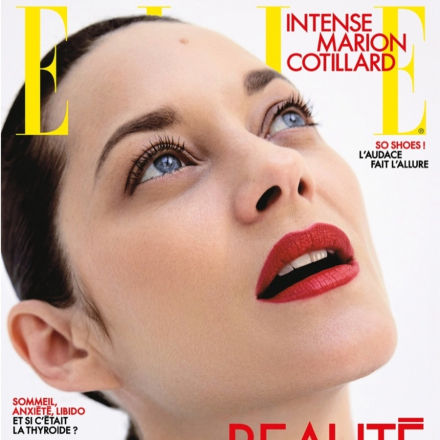
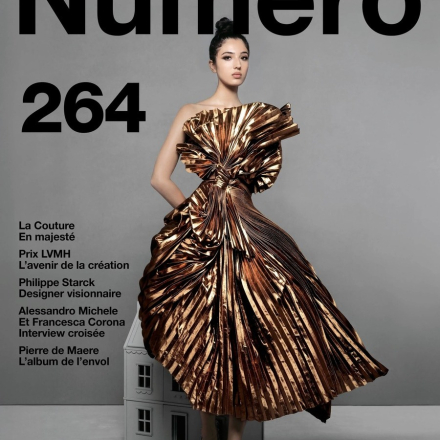
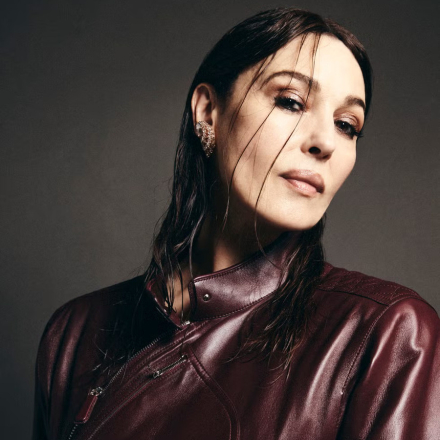
Her beauty is constantly compared to her mother’s, her famous surname instantly attracts attention, and every public appearance becomes a talking point. Deva Cassel, daughter of the legendary Monica Bellucci and French actor Vincent Cassel, has grown accustomed to public interest long before she had the chance to make a name for herself on her own terms.
Yet behind the camera flashes and glossy photographs lies another side to the story. In a recent interview with British publication Beyond Noise, the young model spoke candidly about how difficult it can be to grow up under the public’s watchful eye when your parents are already legends.
A Famous Surname Is Not Just a Privilege
At first glance, being born into a family of two famous actors seems like a ticket to a world of endless opportunities. Connections, media attention, invitations to prestigious events — it can all sound like a dream, especially for someone just starting a career.
For Deva, however, her parents’ fame has also become a source of psychological pressure. According to her, the public has placed exceptionally high expectations on her from the very beginning. It is as though she is expected to be extraordinary before she has even had the chance to show the world who she really is.
And that is one of the biggest traps of growing up in a famous family: the world seems to have written your story for you without ever asking whether you want to play that role.
After all, being the daughter of famous people does not mean you have to become their extension. Deva has her own ambitions, personality, doubts, and the right to make mistakes. But when thousands of eyes follow her every move, even the ordinary process of finding herself becomes a public test.
“I’m Not My Mother’s Shadow”
Deva’s words sound like a deeply personal confession — and, at the same time, a firm declaration of her own identity.
Monica Bellucci has long been an icon of feminine beauty, elegance, and charisma. Her face is recognised around the world, and her career spans several decades. It is hardly surprising that being compared to such a famous mother can become exhausting.
When a young woman is constantly judged through the lens of her mother’s appearance, she has to prove not only her own talent but also her right to be an individual in her own right. Every resemblance inspires admiration, while every difference can become a target for criticism.
But Deva does not want to be merely the beautiful heir to a famous surname. Her words are a reminder that growing up alongside someone admired by the entire world does not mean your life has to become a copy of theirs.
And perhaps that is what real courage looks like: not trying to outshine your mother, but allowing yourself to be your own person.
When Criticism Makes You Turn Away From Your Own Reflection
One of the most revealing parts of Deva’s confession concerns the way she has been affected by constant criticism. The model admitted that she still struggles to watch herself on screen.
There is much more behind that statement than ordinary nerves in front of a camera. When someone is constantly under public scrutiny, it can become increasingly difficult to see themselves without filtering their self-image through other people’s comments. Instead of noticing their own emotions, movements, or work, they begin searching for flaws that others might have spotted.
It becomes even harder when the criticism is not limited to professional choices but extends to physical appearance — a subject that often dominates conversations in the fashion industry.
Of course, one statement cannot tell us everything Deva may be experiencing. Still, her words highlight a problem many women will recognise: sometimes we spend so long looking at ourselves through other people’s eyes that we forget how we see ourselves.
Social media only amplifies this effect. One comment can ruin your mood, dozens of judgments can shake your confidence, and endless comparisons can make you question even the things you once liked about yourself.
Beauty That Needs No Proof
Deva Cassel has what thousands of young women dream of: a famous surname, the attention of the fashion industry, and the opportunity to appear in prestigious publications. Yet her story shows that outward advantages do not shield anyone from inner struggles.
You can be beautiful and still doubt your own attractiveness. You can have talented parents and fear that you will never measure up. You can receive compliments and still find criticism deeply hurtful.
None of this makes a person weak. It simply reminds us that self-confidence does not automatically come with fame, money, or success.
Perhaps Deva still has a long way to go before she can look at herself without the weight of other people’s expectations. But her words already offer an important reminder: no woman should have to spend her entire life proving that she deserves to stand on her own.
Giving Yourself Permission to Be Imperfect
Deva Cassel’s story is about more than famous parents and the fashion world. It touches on a universal human desire: to be accepted not for our background, appearance, or ability to meet someone else’s standards, but for who we truly are.
We often compare ourselves with our mothers, friends, colleagues, and the famous women staring back at us from magazine covers. We feel we should be prettier, more successful, more confident — preferably by yesterday. But in the race for perfection, it is easy to lose our own voice.
Perhaps true freedom begins when we stop being someone’s daughter, someone else’s copy, a rival, or the embodiment of other people’s expectations — and finally allow ourselves to be who we are.
Deva said, “I’m not my mother’s shadow.” Every woman who has ever felt pressured to fit someone else’s idea of who she should be may recognise herself in those words.
Because the best version of yourself is not the one who outshines everyone else. It is the one who no longer needs to prove that she has the right to be herself.