ONLINE WOMEN’S MAGAZINE
HEALTH
We track our sleep quality, count our steps, choose workouts based on our heart rate, and even try to optimize our stress levels. Yet many women still think of the menstrual cycle as just a few days a month that they simply have to get through.
We track our sleep quality, count our steps, choose workouts based on our heart rate, and even try to optimize our stress levels. Yet many women still think of the menstrual cycle as just a few days a month that they simply have to get through.
In reality, the menstrual cycle is much more than menstruation. It is a complex biological process that can affect your well-being, energy levels, mood, skin condition, and libido.
Let’s take a closer look at what happens to the body throughout the cycle and how you can take these changes into account in everyday life.
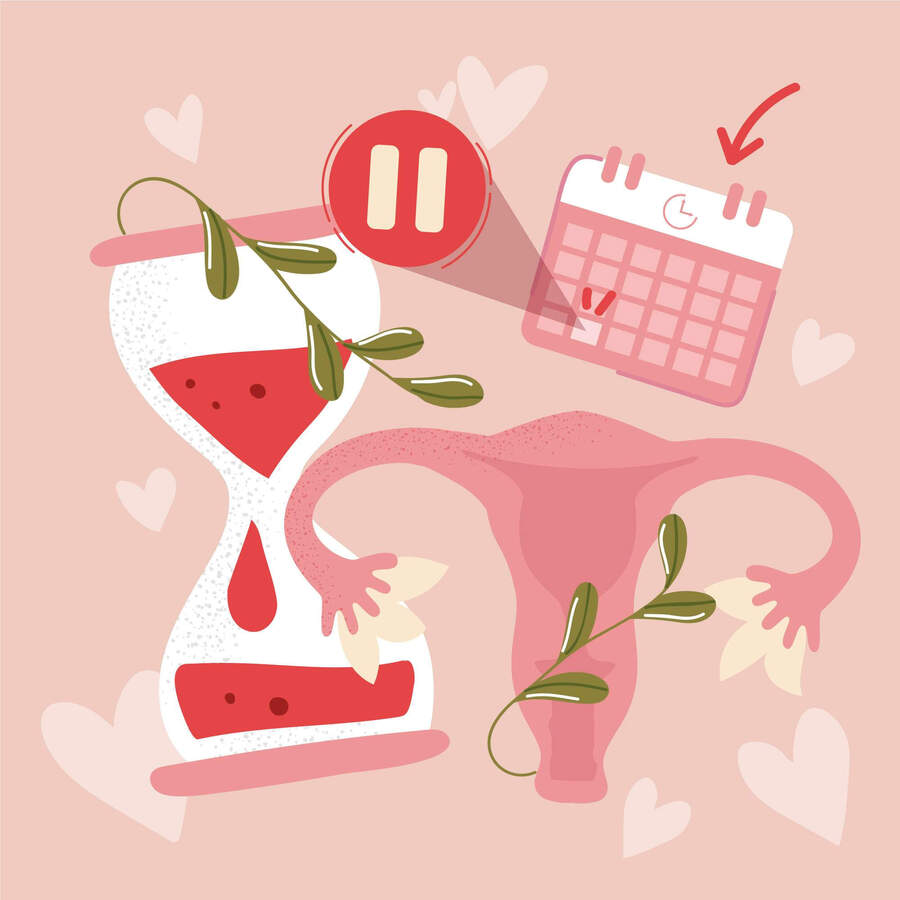
The menstrual cycle is a sequence of hormonal and physiological changes that prepares the body for a potential pregnancy each month.
The ovaries, where the egg matures, and the uterus, whose inner lining — the endometrium — prepares for possible implantation of a fertilized egg, play the central roles in this process.
Among the hormones involved in regulating this complex mechanism are estrogen and progesterone. Their levels change throughout the cycle, and so can your well-being, energy levels, and other physical and emotional sensations.
In adult women, the cycle usually lasts approximately 24 to 38 days, although its individual length can vary.
For simplicity, it can be divided into four main stages.
What happens: If pregnancy does not occur, estrogen and progesterone levels fall. The endometrium is shed, resulting in menstrual bleeding.
Menstruation usually lasts several days, but its duration and characteristics can vary considerably from one woman to another.
It is important to pay attention not only to the calendar but also to the intensity of the bleeding. If you need to completely change your menstrual product very frequently, especially if this is accompanied by weakness, dizziness, or shortness of breath, it is worth discussing the situation with a doctor. Excessive menstrual blood loss can lead to iron deficiency and anemia.
And one more important point: menstruation does not automatically mean that sex, exercise, or your usual routine are off-limits. It all depends on how you feel and what you are personally comfortable with.
After menstruation begins, the body gradually moves into the next stage.
Follicles begin developing in the ovaries, one of which will eventually become dominant. Estrogen levels rise, while the endometrium begins to rebuild.
This is the period when many women feel their energy gradually returning.
Your mood may improve, concentration may become easier, and you may feel more inclined to move around and socialize.
Estrogen also affects the skin and connective tissues, so some women notice that their skin looks fresher during this phase.
This can be a good time to return to a more active routine — provided, of course, that you feel well.
Approximately halfway through the cycle, ovulation occurs — the release of an egg from the dominant follicle.
At the same time, significant hormonal changes take place. Many women experience increased sexual desire, energy, and sociability during this period.
Cervical discharge may also change: it can become clearer, more slippery, and more elastic. This is a normal physiological response associated with the fertile period.
Ovulation is also important for those who are planning a pregnancy or, conversely, trying to avoid one. The calendar alone is not a reliable way to determine “safe” or fertile days.
After ovulation, the corpus luteum forms at the site of the follicle and begins producing progesterone.
Its main role is to prepare the endometrium for a possible pregnancy.
It is during the second half of the cycle that some women begin to feel the need to slow down a little.
You may experience sleepiness, changes in appetite, mood swings, a feeling of puffiness, bloating, or increased breast tenderness.
Before menstruation, hormone levels fall if pregnancy has not occurred. During this period, some women experience symptoms of PMS.
At the same time, it is important not to blame every instance of feeling unwell on “hormones.” If your symptoms are severe or regularly interfere with work, sleep, or everyday life, it is a good reason to consult a gynecologist.
It is important to avoid another extreme here. Your menstrual cycle should not turn into a rigid calendar where every day has a predetermined workout, workload, and mood.
Every body is different, and well-being is influenced by sleep, stress, nutrition, illness, contraception, and countless other factors.
However, observing your own cycle can help you understand yourself better.
If you feel like training harder during the first half of your cycle, make use of that energy. If your body asks you to slow down during menstruation or toward the end of the cycle, there is no need to force yourself to perform at maximum intensity.
Yoga, Pilates, walking, or light strength training can be comfortable alternatives to intense workouts if you are feeling tired.
However, there is no universal rule that says “hard workouts are only for the first half of the cycle.” Above all, pay attention to how you feel and how your body responds to training.
If your skin becomes oilier or breakouts appear before menstruation, you can take this into account when planning your skincare routine.
But there is no need to completely overhaul your cosmetics routine simply because the calendar says you are entering a particular phase. It is better to observe how your skin responds and, if the problem keeps recurring, choose an appropriate routine together with a dermatologist.
Instead of believing in a universal formula like “ovulation is the time for brilliant presentations,” observe yourself over several months.
You may indeed notice that certain days make it easier for you to concentrate, negotiate, or tackle complex tasks.
If so, why not use your own observations when planning your schedule?
This is far more useful than trying to force yourself into someone else’s hormonal calendar.
The most valuable thing you can do is start observing your own body.
Keep track of your menstrual dates, well-being, energy levels, sleep, mood, and unusual symptoms. After several months, you may begin to notice your own individual patterns.
And then the cycle stops being a mysterious sequence of “good” and “bad” days.
You start to see the system behind it.
But there is one fundamentally important point: you do not need to “beat” your hormones. They are neither an enemy nor a superpower that you can switch on whenever you need it. They are part of the complex physiology of your body.
Our task is not to force this system to follow a schedule, but to learn to notice its changes and take care of ourselves accordingly.
It is especially important not to self-diagnose if your cycle suddenly changes significantly or your symptoms become unusually severe.
Reasons to seek medical advice may include very heavy or prolonged bleeding, severe pain, pronounced weakness, dizziness, fainting, sudden changes in your cycle, or symptoms that seriously affect your quality of life.
The menstrual cycle can indeed tell you a lot about your health. But “listening” to it does not mean looking for a new problem in yourself every month.
It means knowing what is normal for you.
We can buy smartwatches, count calories, optimize our sleep, and create complicated workout schedules.
But sometimes the most useful tool is already inside us.
The menstrual cycle is not an obstacle to normal life, nor is it a reason to “drop out” of life every month.
It is a dynamic system that changes throughout the month.
And the better you understand your own rhythm, the easier it becomes to distinguish normal individual fluctuations from signals that genuinely deserve attention.
Are you a man?
Visit MEN'S CULT