ONLINE WOMEN’S MAGAZINE
HEALTH
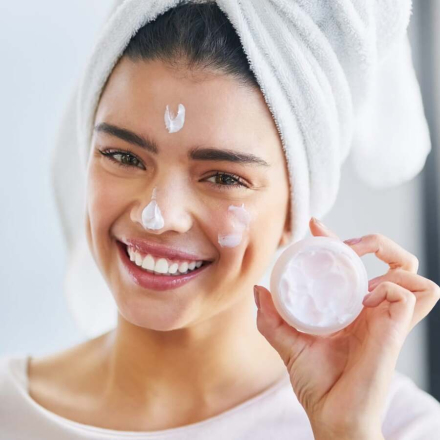
Just a few years ago, the word “peptides” sounded as if it was being pronounced by someone in a white lab coat somewhere in a sterile laboratory. Today, everyone is talking about them — from cosmetologists and fitness influencers to friends chatting in a café about a new cream “with an effect like after a vacation and being in love.”
Just a few years ago, the word “peptides” sounded as if it was being pronounced by someone in a white lab coat somewhere in a sterile laboratory. Today, everyone is talking about them — from cosmetologists and fitness influencers to friends chatting in a café about a new cream “with an effect like after a vacation and being in love.”
Peptides have suddenly become a new religion of the beauty industry. They are added to serums, patches, shampoos, capsules, and even cocktails for “perfect sleep and eternal youth.” Social media promises smooth skin, a fresh look, radiance, energy, and almost a new version of yourself.
But what is really hidden behind this trendy word? And why is there so much hype around peptides?
Imagine a large protein as a long necklace made of hundreds of beads. If you break it into small fragments consisting of just a few amino acids, you get peptides.
Their small size is exactly what made them stars of modern cosmetology.
Most large molecules simply cannot penetrate deep into the skin. Peptides can. They act like short messages sent to cells: “It’s time to produce collagen,” “Repair is needed,” “Calm inflammation,” “Make the skin firmer and fresher.”
In fact, peptides work like highly intelligent signals for the body.
And the most interesting part — our body already produces them naturally. For example, insulin is also a peptide hormone. But today, the world is especially obsessed with synthetic versions that can be applied externally.
Because modern women live in a constant acceleration mode.
You have to look fresh even after three hours of sleep. Do everything. Not age. Not get tired. Not fall behind. And ideally, get results quickly.
And peptides sell exactly that dream.
They promise not just “care,” but intelligent interaction with the body. Not hiding the problem, but sending a signal to cells to fix it themselves.
Peptides have especially conquered three areas.
The loudest story is anti-aging skincare.
Marketing around peptides today sounds almost like science fiction: the skin “remembers youth,” cells “restart,” wrinkles are “erased from within.”
And there is some truth to it.
Some peptides can indeed stimulate collagen production and improve skin condition. As a result, after good products, the skin may look firmer, smoother, and more hydrated.
But it is important to understand: a cream cannot turn forty into twenty-five.
Peptides are not magic. They are a tool. And they work best as part of a system: sleep, nutrition, sun protection, proper skincare, and consistency — not a single “miracle bottle.”
Another reason for their popularity is neuropeptides.
Some of them can slightly relax facial muscles. For example, argireline is often called “Botox for those who are afraid of Botox.”
The effect can indeed be softer and more natural: facial expressions remain, but the face looks more relaxed.
That is why many women see peptides as a gentler path to rejuvenation — without the feeling of a frozen face.
But the real boom began when peptides moved beyond skincare.
Today they are discussed in the context of sleep, weight loss, energy, sports, recovery, and even productivity. The internet is full of stories about “secret youth protocols,” where peptides almost become a cult.
And this is where the most dangerous part begins.
Because interfering with the hormonal system is not a game of pretty packaging.
Some peptides are indeed used in medicine under medical supervision. But a large number of products sold online are barely regulated at all.
Behind a nice name could be anything — from useless powder to a substance with unpredictable consequences.
Because they fit perfectly into the era of social media.
Today people want fast results and fast explanations. Everything must be “scientific,” “innovative,” and preferably show results within a week.
The word “peptides” sounds complex, modern, and expensive — and therefore trustworthy.
Add TikTok, beauty influencers, the biohacking trend, and the obsession with eternal youth, and you get a perfect marketing storm.
The truth, as usual, lies somewhere in between.
Peptides can indeed be useful. Some have scientifically proven effectiveness and have long been used in medicine and cosmetology.
But the problem starts when the impossible is promised.
If a product guarantees eternal youth, instant weight loss, perfect skin, and a new life all at once — it is no longer science, but a beautiful story for exhausted people.
The most reasonable attitude toward peptides today is healthy interest without blind admiration or panic.
Because real beauty is never built on a single bottle — even if it carries the trendiest word of the year on its label.
Are you a man?
Visit MEN'S CULT