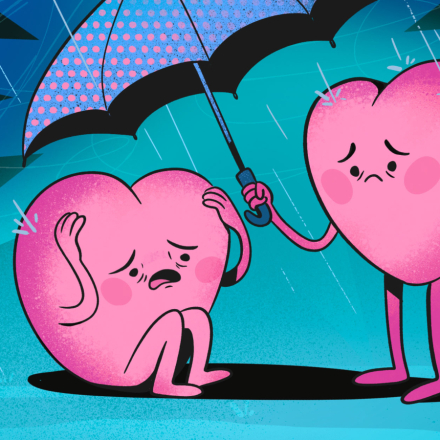
When Emotional Intimacy Starts to Feel Like Work
At first, everything seems almost perfect. The other person opens up about their feelings, shares childhood memories, and talks about their fears and doubts. They tell you things they may not share with anyone else. Isn’t that a sign of a special connection?
Of course, this kind of openness can be a sign of genuine trust. But over time, you begin to notice that nearly every conversation eventually comes back to their problems. You know who hurt them, why their boss failed to appreciate their efforts yet again, what happened with their friends, and why life once more didn’t go according to plan.
Your own stories, meanwhile, seem to fade into the background. You start talking about your day, and a few minutes later, you’re comforting them again. Did you want to share some good news? Somehow, the conversation turns into another discussion about a crisis. Did you need support? Instead, you hear that the other person is having a much harder time than you are.
This is one way a behavioral pattern known as emotional gold digging can show up in a relationship.
Who Are Emotional Gold Diggers?
The word gold digger is usually associated with someone who pursues relationships for financial gain. An emotional gold digger operates differently: their main resources are someone else’s attention, time, empathy, and emotional energy.
They may never ask you for money, expensive gifts, or favors. What they need is less tangible but no less valuable: to be constantly listened to, reassured, supported, and helped through every difficulty.
One important distinction: this is a popular term describing a particular relationship dynamic, not an official psychological diagnosis. And not everyone who complains frequently or goes through a difficult period is an emotional gold digger.
The difference comes down to reciprocity. In a healthy relationship, partners take turns being strong and vulnerable. Today, you support them; tomorrow, they show up for you. But when emotional support consistently flows in only one direction, even the strongest connection can become exhausting.
5 Signs You’ve Become Someone’s Full-Time Emotional Support System
1. There’s Always a Main Character in Your Conversations — and It Isn’t You
At first, it seems like the other person simply enjoys sharing their feelings. Gradually, however, it becomes clear that their problems take up almost all the space in your relationship.
You may spend hours listening, remember the details of every argument, and try to find solutions. Meanwhile, your own struggles receive far less attention. You might get a brief response, see the subject change, or find the conversation redirected toward their experiences.
Eventually, a strange feeling sets in: you seem incredibly close, yet you wonder whether the other person really knows you at all.
2. You Feel Guilty When You Don’t Have the Energy to Listen
You’re exhausted after work and dreaming of a shower, dinner, and a quiet evening without long conversations. Then your phone lights up again with a message: “I need to talk to you.”
You already know another lengthy conversation is coming, but saying no feels difficult. What if they get offended? What if they think you don’t care? What if they’re left to deal with their problems alone?
Little by little, the trap takes shape: you start treating someone else’s emotional state as your responsibility. But feeling empathy doesn’t mean you’re obligated to be available around the clock to rescue someone from a bad mood.
3. Your Feelings Are Always Put Off Until Later
“Let’s deal with my situation first, and then we can talk about yours.”
If this happens occasionally, the statement may seem harmless. The problem begins when that “later” never comes.
You get used to keeping your struggles to yourself because you don’t want to burden the other person. You hide your disappointment, postpone important conversations, and gradually convince yourself that your needs can wait.
But intimacy isn’t a competition to determine who has it worse. You don’t have to prove that your problems are serious enough to deserve attention.
4. You Feel Emotionally Drained After Spending Time Together
An ordinary conversation can be tiring, especially after a busy day. Usually, though, a little rest helps you recharge.
It’s different when every interaction with a particular person leaves you feeling tense, irritable, or guilty. You may replay the conversation in your head for hours, wonder whether you offered enough support, and worry that you won’t find the right words next time, either.
This is a sign to pay attention to how you feel and how your communication works. On its own, it doesn’t prove that the other person is deliberately taking advantage of you, but recurring emotional exhaustion shouldn’t be ignored.
5. You’re Increasingly Convinced You Have to Earn Love
When supporting the other person becomes your main role in the relationship, it’s easy to start believing that this is precisely why they value you.
You try to be patient, attentive, and understanding, making sure you don’t create any additional problems. You swallow your hurt, smooth over conflicts, and always find excuses for the other person’s behavior.
But there’s an important difference between wanting to be a good partner and feeling that you must constantly prove you deserve love. In a healthy relationship, you’re valued for more than how much you can endure.
Why Do We Stay in This Role for So Long?
You might think that if a relationship is draining you, all you have to do is say no. In reality, it’s much more complicated — especially when the person involved is someone you love.
We feel empathy. When someone close to us is struggling, it’s natural to want to help. That instinct can be even stronger if they had a difficult childhood, are dealing with problems at work, or seem to face one setback after another. We want to become their safe place, somewhere they can finally breathe.
We’re afraid of seeming selfish. Many of us were taught from childhood to be accommodating, avoid saying no, help others, and put their needs first. As a result, even the simple desire to spend some time alone can trigger an outsized sense of guilt.
We hope things will change. We remember the tender moments, the promises, and the periods when our partner was genuinely attentive. We tell ourselves that with a little more patience, they’ll eventually learn to recognize our needs, too.
We’ve already invested so much. Time, energy, shared memories, and hardships we’ve faced together can all make it harder to step back. Sometimes, leaving feels like admitting that all our previous efforts were wasted.
But there’s one thing worth remembering: empathy doesn’t require you to sacrifice yourself. You can love someone, understand their struggles, and still acknowledge your own limits.
Do Emotional Gold Diggers Do It on Purpose?
Not always. Some people genuinely struggle to recognize their emotions, calm themselves down, or seek support from different sources. They may sincerely believe they’re simply sharing their feelings with the person closest to them, without realizing how one-sided the relationship has become.
Upbringing, past experiences, communication habits, and a lack of emotional self-regulation skills can all contribute to this pattern. There’s also a widespread belief that a romantic partner should be your loved one, best friend, adviser, and practically your only source of psychological support all at once.
But even when there are no bad intentions, the consequences for the person on the receiving end can be very real.
You don’t have to prove that someone is deliberately manipulating you to acknowledge that a particular relationship dynamic isn’t working for you. What matters isn’t just why someone behaves this way, but whether they’re willing to listen to you and change how you relate to each other.
How to Reclaim Your Emotional Energy Without Becoming Everyone’s Rescuer
Start by Taking an Honest Look at the Relationship
Try asking yourself a few questions. Can you talk about your own feelings without worrying that the conversation will shift back to your partner? Does the other person care about how you’re doing? Do they respect your need for rest? Does anything change after you talk about the importance of mutual support?
You don’t need to count every minute of emotional support or demand perfect mathematical equality. During difficult periods, the balance can temporarily shift. What matters is that this doesn’t become the permanent rule.
Learn to Say No Without Endless Explanations
You have the right not to be available every moment of the day. And you don’t need a dramatic explanation to justify it.
You can say, “I can see that you’re going through a difficult time, but I don’t have the energy for a long conversation today. Let’s talk about it tomorrow.”
Or: “I want to support you, but I need some time to rest, too.”
That isn’t coldness or punishment. It’s an honest statement about what you can manage right now.
Don’t Take Responsibility for Other People’s Decisions
Supporting someone doesn’t mean solving all their problems. You can listen, ask questions, and help them explore their options, but the final decisions are theirs to make.
If the same crisis keeps repeating, you don’t have to come up with a new solution on your partner’s behalf every time. Sometimes it’s more helpful to ask, “How do you think you could get out of this situation?” or “What are you willing to do to make things change?”
Pay Attention to How They React to Your Boundaries
This is one of the most important things to notice. A caring partner may feel disappointed when you say no, but over time, they’ll learn to respect your needs and limitations.
However, if every “I can’t” is met with accusations, pressure, conspicuous sulking, or claims that you’re obligated to help, it’s worth taking a closer look at the relationship.
Your boundaries don’t have to please everyone. But you have every right to set them.
Make Room for Yourself in Your Own Life Again
Don’t wait for everyone to calm down, every problem to be resolved, and the people close to you to stop needing help. That day may never come.
Make plans with friends, spend time doing the things you love, and rest without feeling guilty. Don’t abandon your own plans every time someone faces another crisis.
If emotional exhaustion persists, interferes with your daily life, or comes with constant anxiety, talking to a mental health professional may help you understand your boundaries and find healthier ways to care for yourself.
Love Is Not Unlimited Access to Your Energy
We often romanticize the idea of being the person someone can tell absolutely everything to. Being a source of support, accepting another person’s vulnerabilities, and staying by their side through their darkest moments are all genuinely important parts of a relationship.
But intimacy doesn’t mean one person has to absorb all of someone else’s emotions while forgetting about their own.
You can be compassionate without becoming everyone’s rescuer. You can offer support without solving other people’s problems for them. You can love someone without accepting a relationship in which your needs always come last.
Sometimes, the most important question isn’t “Am I doing enough for this person?” but rather, “Is there still room for me in this relationship?”
Because real intimacy isn’t about one person constantly giving while the other endlessly takes. It’s about both people being allowed to be vulnerable, both being able to ask for help, and both feeling free to say, “I’m tired today. Please stay with me for a while.”
You don’t have to drain yourself completely to prove that you love someone.