ONLINE WOMEN’S MAGAZINE
LOVE
Not so long ago, the story of a successful woman almost always followed the same script: a career, love, marriage, children, a cozy home, and family dinners around the kitchen table.
Not so long ago, the story of a successful woman almost always followed the same script: a career, love, marriage, children, a cozy home, and family dinners around the kitchen table. Today, that storyline no longer feels like the only path to happiness. More and more women are building their lives on their own terms, postponing marriage, delaying motherhood, or consciously choosing to live without a partner.
That’s exactly why, over the past few years, people around the world have been discussing a forecast from the international financial company Morgan Stanley: by 2030, around 45% of women between the ages of 25 and 44 could be single and child-free.
It sounds alarming. But does it really mean we’re facing a crisis? Or are we simply living in an era where women’s lives no longer have to follow one traditional script?
The forecast quickly spread across global media because it touched on an incredibly sensitive topic.
For some, 45% is a sign of a demographic crisis.
For others, it’s proof that women are no longer willing to settle for relationships at any cost.
As is often the case, the truth is probably somewhere in between.
Today, being a single woman does not automatically mean being an unhappy woman.
Over the past twenty years, women’s lives have changed dramatically.
Today, women can:
What used to be the exception has become part of everyday life.
And with these new opportunities came new priorities.
It may sound surprising, but economists have long been talking about a phenomenon known as sheconomy—an economy centered on women as consumers, employees, and entrepreneurs.
Single women are more likely to invest in themselves.
They spend money on:
In fact, they represent one of the largest and fastest-growing consumer groups in many industries.
For decades, society presented women with a difficult choice.
Either a career.
Or a family.
But today’s generation is increasingly trying to combine both.
The challenge is that, in many countries, doing so is still far from easy.
Limited support for parents, expensive childcare, high housing costs, inflation, and economic uncertainty encourage many women to postpone having children.
This is no longer a trend limited to one country.
Europe, South Korea, Taiwan, and Japan are all experiencing similar demographic shifts.
People are getting married later.
They’re becoming parents later.
And some are choosing not to become parents at all.
The reasons vary:
At first glance, finding love today seems easier than ever.
You just open an app.
But psychologists point to another phenomenon: the paradox of choice.
When there are endless options, it becomes much harder to choose just one person.
On top of that, there are:
The result? More dates and more matches, but not necessarily more lasting relationships.
Ten years ago, hearing “she’s single” often sounded like sympathy.
Today, more women openly say:
“I’m single—and I’m happy.”
That doesn’t mean they’ve given up on love.
It means they’ve stopped accepting relationships that lack respect, security, and peace.
This is where the most important conversation begins.
Not every woman is single because she wants to be.
There’s another side to the story:
Being alone can feel peaceful and empowering.
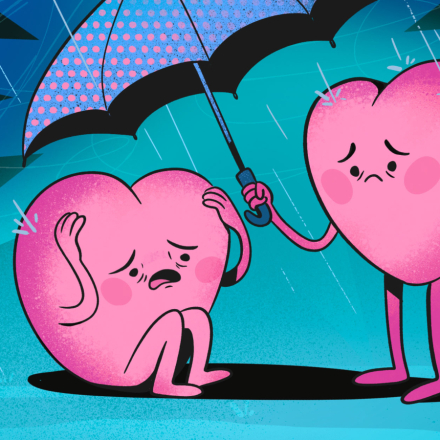
But it can also feel deeply painful.
And that part of the conversation receives far less attention.
Interestingly, many countries did not interpret this forecast as a catastrophe.
Instead, it has been viewed as confirmation that women have the right to live life on their own terms.
Not getting married simply because “it’s time.”
Not having children because society expects it.
Not staying with a toxic partner just to avoid being single.
That represents a profound cultural shift.
Perhaps we’re simply redefining what partnership really means.
Instead of “staying together at any cost,” what matters more and more is:
The quality of a relationship is beginning to matter more than simply being in one.
Probably not.
Forecasts describe trends—not the destiny of every individual person. They don’t mean that nearly half of all women are doomed to live without love or family.
Instead, they suggest that women’s lives are becoming more diverse, and that there are now more ways to build a happy, fulfilling life than ever before.
Are you a man?
Visit MEN'S CULT