ONLINE WOMEN’S MAGAZINE
LOVE
We grew up believing in stories about a love powerful enough to overcome anything. “For better or for worse,” “love conquers all,” “if you truly love someone, you don't leave when life gets hard.”
We grew up believing in stories about a love powerful enough to overcome anything. “For better or for worse,” “love conquers all,” “if you truly love someone, you don't leave when life gets hard.” These promises sound beautiful until life asks a much more uncomfortable question: what do you do when the person you love has been living with anxiety, depression, or another mental health condition for years, and somewhere along the way, you stop recognizing yourself?
We talk about this much less often. Because it's frightening to admit, even to yourself: sometimes love isn't enough. And that doesn't make you a bad person.
At first, it all feels completely natural.
Your partner is going through a difficult time. You listen, comfort, hug them, and search for the right words. It seems like a normal part of a healthy relationship—today they need support, tomorrow it might be your turn.
But sometimes that “difficult time” never ends.
Anxiety becomes the constant background noise of everyday life. Depression steals the energy to live. Panic-filled thoughts return day after day. And before you realize it, support stops being something temporary—it becomes your new role.
You're no longer just a partner. You become the crisis manager, the therapist, the rescuer, the person trying to keep the world from falling apart every single day.
Many women grow up believing they're supposed to take care of everyone else. We're taught that if we love someone enough, we can help them heal.
But mental health conditions don't work that way.
Anxiety doesn't disappear because of logical arguments. Depression isn't cured by saying, “Think positive.” A person can fully understand that their fears are irrational and still be unable to stop feeling them.
That's where helplessness begins.
You explain, support, research, read articles, suggest seeing a professional. Then one day you realize that none of it has changed the situation the way you hoped it would.
And that realization hurts.
The most invisible danger is that your partner's emotions begin to shape your life.
You stop sharing certain news because it might upset them. You carefully choose your words. You avoid suggesting spontaneous trips, a new job, or even dinner somewhere unfamiliar because it could become another trigger.
Little by little, your world gets smaller.
You start calculating every possible risk to prevent another wave of anxiety. You control more than you want to. You imagine worst-case scenarios, even though you never used to think that way.
And one day you catch yourself thinking: this isn't just their anxiety anymore. It's mine too.
There's a huge difference between compassion and disappearing into someone else's pain.
Love doesn't ask you to give up your own emotions. Yet that's exactly what often happens.
When your partner is struggling, you feel like you have no right to talk about your exhaustion. When they're having a panic attack, you're ashamed to admit that you're burned out too. When someone you love is suffering, your own problems suddenly seem less important.
That's how a dangerous rule is created: one person gets to have pain, while the other is expected to provide endless support.
Healthy relationships don't work like that.
We often overestimate what we can do.
Yes, a loving partner can be an incredible source of support. But they cannot replace therapy, psychiatric care, or medication when those are needed.
If your partner completely denies the problem or refuses professional help, that's also a reality you may have to face.
And that's when the most painful question appears: how much longer are you supposed to carry everything on your own?
The answer isn't always comforting. Sometimes it's simply this: you cannot force an adult to seek treatment.
Many women stay in emotionally exhausting relationships because they feel guilty.
“How can I leave when they're struggling?”
“What if they need me more than ever right now?”
“Does choosing myself make me a terrible person?”
Those questions can stay with you for years.
But there's another question that's just as important: who's taking care of you when you've reached your limit?
Being exhausted doesn't mean you've stopped loving someone. It means you've run out of emotional resources.
We're all familiar with the advice: “Put on your own oxygen mask before helping someone else.”
For some reason, we forget that lesson when it comes to love.
Taking care of yourself can mean:
That's not betrayal. It's a way of making sure you don't lose yourself.
The hardest truth is that love doesn't always save people.
It doesn't cure an anxiety disorder. It doesn't erase depression. It can't make someone want treatment if they refuse it.
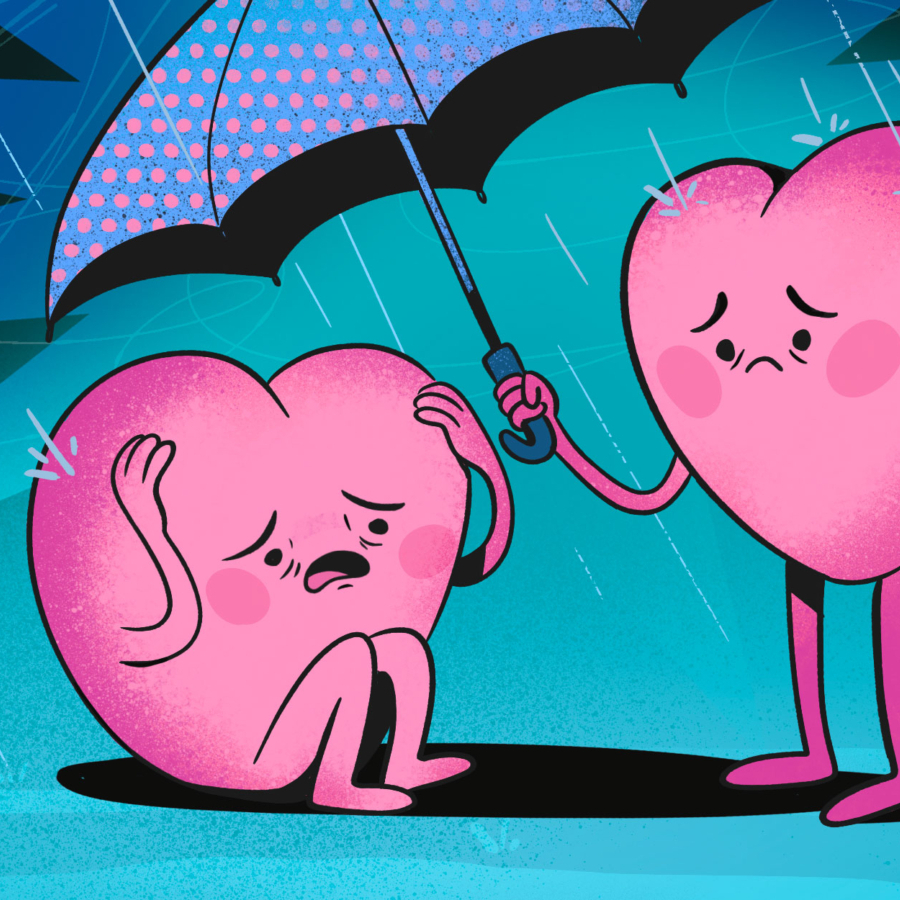
But love can remind you of something equally important: you're a person too. You have fears, limits, and the right to be tired.
Sometimes the healthiest choice is staying by someone's side without carrying their illness for them. And sometimes the healthiest choice is walking away if that illness is slowly destroying your own life.
Living alongside someone with mental health challenges can be incredibly difficult. That doesn't mean they're a bad person or responsible for their illness. And it doesn't mean an exhausted partner loves them any less.
We've become much better at talking about supporting people with mental health conditions. But we still don't talk enough about the people doing the supporting.
Maybe it's time to stop feeling ashamed of this truth: helping someone you love is important, but not at the cost of your own mental health. Because when you're trying to save someone else, it's just as important not to drown yourself.
Are you a man?
Visit MEN'S CULT