ONLINE WOMEN’S MAGAZINE
LOVE
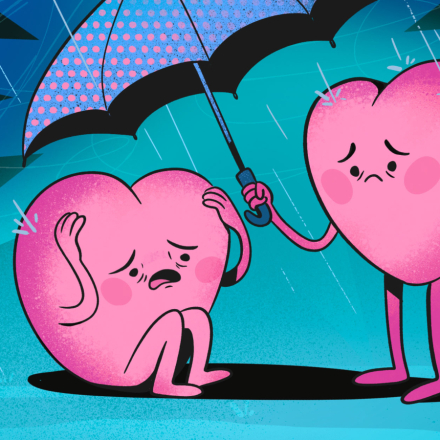
When a woman gradually stops being simply a partner and becomes a kind of emotional manager: monitoring his mood, choosing the right words, defusing conflicts, reminding him about important events, managing his social life, motivating him, calming him down, and even trying not to create «unnecessary problems» because he already has enough on his plate.
«You know how to calm him down.»
«Talk to him, he’ll listen to you.»
«Come on, be the understanding one.»
«He’s going through a difficult time — support him.»
Sound familiar?
At first glance, there is nothing particularly troubling about these phrases. After all, in close relationships, we support one another: we listen after a difficult day, hug each other when things get tough, and help each other through a crisis.
The problem begins when support stops being mutual.
When a woman gradually stops being simply a partner and becomes a kind of emotional manager: monitoring his mood, choosing the right words, defusing conflicts, reminding him about important events, managing his social life, motivating him, calming him down, and even trying not to create «unnecessary problems» because he already has enough on his plate.
This phenomenon is known as mankeeping: the emotional and social labor a woman takes on to maintain a man’s psychological well-being.
It is important not to fall into the opposite extreme, either. Mankeeping does not mean that every act of care toward a man is exploitation. A healthy relationship is, after all, impossible without mutual support.
The real question is: where does love end and the obligation to carry another adult begin?
Imagine a fairly typical situation.
A man comes home after a difficult day. He is irritated, tired, and quiet. His partner asks what happened. He tells her. She listens, hugs him, and helps him sort through his thoughts.
That is a perfectly normal form of intimacy.
Now add a few details.
She constantly monitors his mood so she knows when it is better not to bring up a difficult subject. She knows exactly what might set him off. She is the one who makes the first move toward reconciliation, even when she is not the one at fault. She knows which friend to contact when he has fallen out with someone. She reminds him about his mother’s birthday, buys the gift, and even explains why he should call her.
And when she herself is having a hard time, she pushes her own feelings aside because «now isn’t the right time».
This is where care begins to take on another dimension.
The woman is no longer simply standing beside her partner. She is managing his entire emotional infrastructure.
Mankeeping is particularly insidious because it can be difficult to recognize from the outside.
A woman may even feel proud of being «the one who always understands him».
She knows better than anyone how to calm him down. She knows when to give him space and when to hug him. She can anticipate how he will react to almost any piece of news. She knows how to cheer him up after a failure.
It sounds romantic.
But let’s ask a very simple question:
Who does all of that for her?
If the answer is — «no one» — then the problem is no longer simply that the woman is too caring.
The problem is a lack of reciprocity.
In a healthy relationship, the roles can shift. Today one partner may be more vulnerable; tomorrow it may be the other. One person goes through a crisis, and the other temporarily takes on more of the emotional load.
That is normal.
What is not normal is when temporary support becomes a permanent position with no days off.
It is not because women are naturally better at «managing» other people’s emotions.
That is a dangerous myth.
From childhood, we are often socialized differently. Girls are more frequently taught to pay attention to other people’s moods, be considerate, give in, offer support, «not make things worse», and look for compromises.
Boys, meanwhile, are more often given a different message: don’t complain, don’t cry, tough it out, be strong.
As a result, an adult woman may have more experience recognizing emotions and automatically step into the role of the person who is expected to manage them.
A man, meanwhile, may simply never have learned how to understand and manage his own emotions.
But here is what matters:
An explanation is not a justification.
If someone has never learned to talk about his emotions, that does not mean his partner should become responsible for his emotional world for the rest of her life.
There is another trap here.
Sometimes the woman gradually takes on the entire burden herself.
Not because anyone forced her to.
It simply seems easier that way.
She can solve the problem faster on her own. It is easier to buy a gift than explain to her partner why it matters. It takes less energy to stay silent than to have yet another argument.
And then, one day, the feeling appears:
«I do so much for everyone, but no one thinks about me.»
That is precisely when it is worth stopping.
The fact that you choose to do something voluntarily does not automatically make the burden lighter.
You can willingly decide to carry ten suitcases by yourself and still end up exhausted from carrying them.
When one partner constantly reassures the other, reminds him about things, organizes, motivates, and explains everything, the dynamic of the relationship slowly changes.
The woman becomes the responsible one.
The man becomes dependent.
She knows what needs to be done.
He waits for someone to tell him.
She thinks several steps ahead.
He gets used to the fact that someone has already thought of everything.
And the romantic relationship begins, almost without either person noticing, to resemble the relationship between a mother and her adult son.
And where there is too much mothering, there is quickly less sexuality, less partnership, and less sense of equality.
It is difficult to desire someone you constantly have to take care of.
It may seem that mankeeping is exclusively a women’s problem.
It isn’t.
When a man becomes accustomed to receiving all of his emotional support exclusively from his partner, he becomes overly dependent on her.
And then any crisis in the relationship can turn into a catastrophe.
A breakup does not simply mean losing the person you love. It can also mean losing your main source of emotional support, social connections, and even the familiar structure of everyday life.
That is why knowing how to take care of your own psychological well-being is not a «women’s job» that a man simply needs to learn to accept.
It is a basic skill of adulthood.
He needs a partner.
Those are two completely different roles.
A partner can listen.
But she is not responsible for healing him.
She can offer support.
But she does not have to keep rescuing him.
She can remind him about an important event.
But she should not become his personal calendar.
She can believe in him.
But she does not have to take responsibility for his career, self-esteem, and every major decision in his life.
And above all, a man should remain an active participant in his own emotional life.
If he is struggling, he can talk about it.
If he is angry, he can learn to understand where that anger comes from.
If he feels lonely, he can build and maintain friendships.
If the relationship is going through a crisis, he does not have to wait for the woman to organize the «serious conversation» all by herself.
None of this takes away his right to be vulnerable.
Quite the opposite.
Knowing how to ask for help is a sign of maturity, not weakness.
Start with a very uncomfortable but honest question:
«Am I supporting my partner, or am I managing his life for him?»
Then take a look at the balance within the relationship.
Can you tell him that you are struggling and feel that he is genuinely listening?
Is he interested in how you are doing with the same level of attention you give to his well-being?
Can he maintain his relationships with friends and family on his own?
Is he capable of solving his own problems without your constant involvement?
Can you say «not right now» without being afraid that it will lead to an emotional catastrophe?
If the answer to most of these questions is «no», the problem may no longer be about individual everyday situations.
There may have been an unequal division of emotional labor in your relationship for a long time.
The most important thing to remember is this: you do not have to become indifferent in order to protect your own boundaries.
You can love someone without solving all their problems for them.
You can hold them without taking responsibility for their mood.
You can listen and say, «I don’t have the energy for this conversation right now.»
You can support them while also asking for support yourself.
That is not selfishness.
That is an adult relationship.
Because a healthy relationship is not a competition in which one person has to be strong for both of you.
It is a space where both people are allowed to fall sometimes, knowing that the other person will help them back up. But no one is obligated to carry the other person on their back for an entire lifetime.
And perhaps this is where the most important boundary between love and emotional exploitation can be found.
Love says: «I’m by your side.»
Exploitation quietly replaces that sentence with another: «You won’t be able to cope without me.»
And the difference between those two sentences is enormous.

Are you a man?
Visit MEN'S CULT