ONLINE WOMEN’S MAGAZINE
LOVE
There was a time when you couldn't wait for the evening to arrive so you could be alone together. A simple touch sent shivers down your spine, flirting filled you with energy, and thoughts of intimacy came naturally.
There was a time when you couldn't wait for the evening to arrive so you could be alone together. A simple touch sent shivers down your spine, flirting filled you with energy, and thoughts of intimacy came naturally.
And now? More and more often, sex feels like just another task on an endless to-do list squeezed between work calls, children's activities, household responsibilities, and chronic exhaustion.
Most importantly, you're not alone.
Psychologists are increasingly discussing a phenomenon that has no official medical diagnosis but is familiar to many women. It's often referred to as sexual burnout.
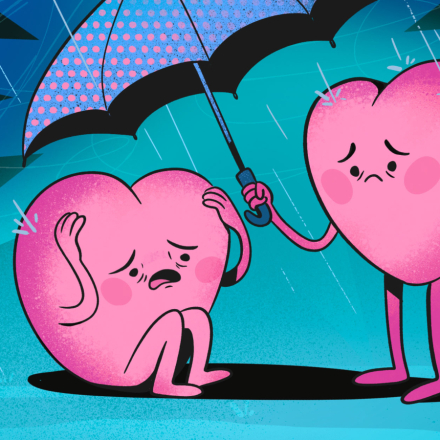
Sexual burnout is a state of emotional and psychological exhaustion related to one's intimate life.
In this state, sex no longer feels like a source of pleasure. Even if the relationship is healthy, the partner is attractive, and there are no obvious problems, the thought of intimacy no longer sparks enthusiasm.
Sometimes the need for release remains, but instead of craving meaningful intimacy, a person may want something simpler, quicker, and more predictable. Not because their partner is no longer appealing, but because their internal resources have been depleted.
Modern women frequently live in a constant state of multitasking.
Be successful at work. Be a caring mother. Be attractive. Be a supportive partner. Be energetic. Be desirable.
The word "be" is repeated so often that it gradually turns into "must."
And that's where the problem begins.
When sex becomes an obligation rather than a desire, the brain starts treating it like another responsibility. Not as pleasure, but as another deadline that needs to be met.
Sometimes the source of exhaustion isn't external circumstances—it's our thoughts.
"Normal couples have sex more often."
"If I say no, he'll be hurt."
"Something must be wrong with me."
"I used to want it more."
These internal beliefs gradually create tension. A person begins forcing themselves to feel a desire they simply don't experience.
Ironically, the harder we try to create desire through willpower alone, the further away it seems to move.
There's another cause that isn't talked about very often.
Mothers of young children understand it particularly well.
Throughout the day, children constantly need hugs, comfort, and physical contact. By evening, the body can feel completely saturated with touch.
A similar experience is common among beauticians, massage therapists, beauty professionals, and others whose work involves frequent physical contact.
At that point, the body isn't asking for more stimulation—it is asking for personal space.
Sometimes the issue disguises itself as ordinary fatigue.
However, there are several signs worth paying attention to:
• thoughts about sex no longer spark interest;
• flirting feels irritating or anxiety-inducing;
• canceling an intimate encounter brings relief;
• intimacy leaves a feeling of emptiness rather than satisfaction;
• sex feels mechanical and emotionally disconnected;
• desire doesn't arise even under ideal circumstances.
If you recognize yourself in several of these signs, there's no reason to panic. But it may be a signal to pay closer attention to your own needs.
Many women make the same mistake—they try to "fix" themselves by putting in even more effort.
In reality, sometimes the healthiest solution is a pause.
Taking a temporary break from sex does not destroy a relationship. On the contrary, it can relieve pressure and restore a sense of freedom.
When the word "have to" disappears, the word "want to" finally has room to return.
Many women know exactly what their partner enjoys.
But can they answer the question, "What do I enjoy?" with the same confidence?
Sexual burnout is often a sign that it's time to reconnect with yourself.
What genuinely interests you?
What kinds of touch feel good?
What creates a sense of closeness?
Which patterns or routines no longer work for you?
The better you understand your own needs, the easier it becomes to bring joy back into your relationship.
Silence rarely solves problems.
When one partner pulls away from intimacy, the other often starts looking for the reason within themselves. Misunderstandings, hurt feelings, and emotional distance can quickly follow.
An honest conversation may be more valuable than any romantic gesture.
Explain that the issue isn't about love or attraction. Share your exhaustion, concerns, and needs.
Sometimes that kind of honesty becomes the first step toward rebuilding genuine intimacy.
The most important thing to remember is that sexual burnout is not a life sentence, nor is it a sign that your relationship is doomed.
Just as we can become exhausted by work, daily responsibilities, or emotional stress, we can also become tired in our intimate lives.
And there's nothing shameful about that.
Sometimes the most important thing a woman can do for herself is stop trying to meet everyone else's expectations and honestly ask herself: "What do I truly want?"
Very often, the answer to that question becomes the starting point not only for the return of desire but also for a deeper connection with oneself.

Are you a man?
Visit MEN'S CULT