ONLINE WOMEN’S MAGAZINE
LOVE
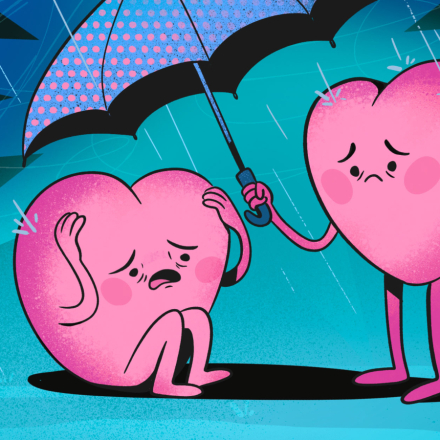
It seems harmless enough: someone hasn't replied to your message for a few minutes. But in your mind, an entire movie has already begun to unfold: "He's upset with me." "I'm going to get fired." "There's no way I'll succeed." "Everything is going to go wrong again."
It seems harmless enough: someone hasn't replied to your message for a few minutes. But in your mind, an entire movie has already begun to unfold: "He's upset with me." "I'm going to get fired." "There's no way I'll succeed." "Everything is going to go wrong again."
Sound familiar?
Our minds are remarkably talented storytellers. The problem is that they often specialize in psychological thrillers. Long before anything has actually happened, we've already lived through dozens of imaginary disasters.
The good news is that this habit can be changed.
Interestingly, very few of us are taught to be optimistic. Anxiety, on the other hand, is an ancient survival mechanism.
Thousands of years ago, the people who expected danger were more likely to stay alive. If a bush suddenly rustled, it was safer to assume there was a predator hiding inside than to walk by without a second thought.
The world has changed dramatically. Our brains haven't.
Today, they react almost the same way to a tiger as they do to an unread message in a chat.
That's why one unpleasant experience can so easily overshadow dozens of positive ones.
Imagine that your thoughts are not facts—they're simply assumptions.
The moment you notice your imagination racing toward disaster, pause and honestly tell yourself:
"I'm not analyzing the situation right now. I'm imagining the worst-case scenario."
This simple sentence has a surprisingly powerful way of bringing you back to reality.
After all, there's a huge difference between thinking, "This is going to happen," and "I'm afraid this might happen."
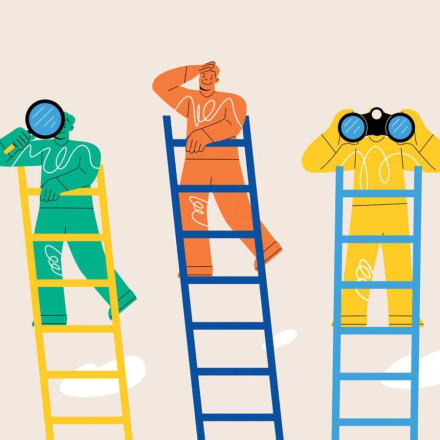
Almost every event can be interpreted in more than one way.
Losing your job could become the beginning of the career you've dreamed about for years.
The end of a relationship might be your chance to stop settling for less than you deserve.
A mistake can become valuable experience that helps you avoid much bigger problems in the future.
This doesn't mean pretending that pain doesn't exist.
It means allowing yourself to see not only what you've lost, but also the new opportunities that may lie ahead.
Sometimes catastrophic thinking isn't about your personality at all.
It's about overload.
Endless news updates, social media, constant notifications, work chats, and dozens of daily decisions keep your nervous system running without a break.
It's no wonder your brain starts expecting danger everywhere.
Try giving yourself more moments to pause.
Even a few minutes away from your phone, a walk among the trees, or an evening free from the constant flow of information can calm your mind far more effectively than another hour of scrolling.
When anxious thoughts pile up, they start to sound incredibly convincing.
That's why sometimes all it takes is a phone call to someone you trust.
You don't even have to ask for advice.
Sometimes the greatest comfort is simply hearing:
"I'm here for you."
A sense of safety is far more powerful than endlessly trying to predict every possible risk.
Our brains adapt to good things surprisingly quickly.
A new job? That's just how it should be.
A compliment? They were only being polite.
A wonderful day? Pure coincidence.
Meanwhile, a single setback can ruin our mood for days.
Try ending each evening by thinking of at least three things you're grateful for that day.
Over time, your brain will begin noticing the good just as carefully as it once searched for problems.
Painting, pottery, baking, knitting, photography, growing flowers on your balcony, or even rearranging your furniture—these aren't just hobbies.
Creativity restores our sense of control over our own lives.
When your hands are busy creating something beautiful, it's much harder for your mind to invent yet another apocalyptic storyline.
Perhaps the most important thing to remember is this: anxious thoughts are not predictions.
They are simply reflections of our fears.
Life is far richer and more unpredictable than even the darkest scenarios our imagination can create.
And more often than not, the best moments arrive when we stop waiting for disaster and allow ourselves to simply live.
Maybe today is the day to stop rehearsing tragedies that haven't happened and finally begin writing your own story. And may it be far brighter than the one anxiety has been so determined to tell.

Are you a man?
Visit MEN'S CULT