ONLINE WOMEN’S MAGAZINE
LOVE
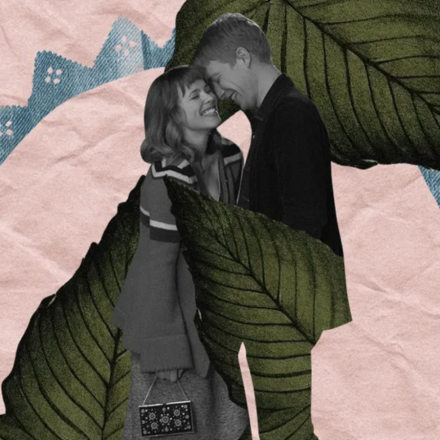
How many times have we heard this phrase — in movies, romantic stories, jokes from friends over a glass of wine: “He is so calm and she is a storm, but they’re perfect together.” It feels like love works exactly this way: two different worlds collide and suddenly fit into a perfect picture.
How many times have we heard this phrase — in movies, romantic stories, jokes from friends over a glass of wine: “He is so calm and she is a storm, but they’re perfect together.” It feels like love works exactly this way: two different worlds collide and suddenly fit into a perfect picture.
But what if that’s not entirely true?
Modern psychology and sociology are increasingly questioning this beautiful myth.
From the perspective of analytical psychology, each of us has not only a “visible version of the self,” but also a hidden one — the so-called shadow of personality. These are traits we do not accept or simply do not notice in ourselves.
And this is where the magic of attraction begins.
We often fall in love with people who seem to “carry” our repressed traits. A reserved person may be drawn to a partner’s emotional expressiveness. Someone who tends to control everything may be fascinated by another person’s spontaneity and chaos.
At first, it feels like a perfect balance: as if the other person completes us and makes us whole.
But this story has a continuation — sometimes inspiring, sometimes very complicated. Because what fascinates us at the beginning can, over time, start to irritate us.
Sociologists and geneticists offer a less romantic but more stable picture.
Research based on large datasets shows something surprising: in reality, couples are much more similar than we think. Across dozens of parameters — from education level to habits and even worldview — the similarity can reach 80–90%.
In other words, we are more often attracted to those who are already “like us,” even if we don’t always notice it.
Shared values, similar attitudes toward life, comparable intelligence, and even daily habits — this is the real foundation of long-term relationships.
Because the brain loves contrasts.
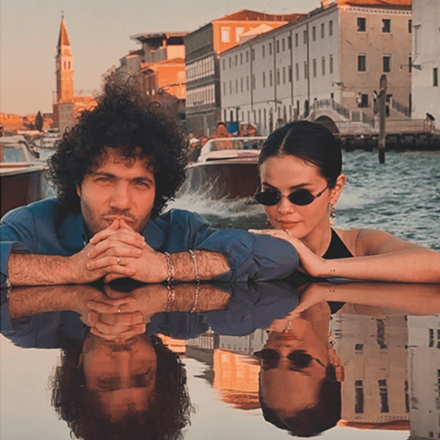
Striking differences immediately catch attention: he is a biker, she is a refined aesthete. He is silent, she talks nonstop. Against this background, it is easy to believe in the magic of opposites.
But behind external “difference” there is often a deep internal similarity — the same sense of humor, similar views on family, the same need for closeness or independence.
We see the scenery, but not always the foundation.
There is another interesting factor: age.
In youth, we are indeed more often drawn to what is “different.” It is a time of experimentation, self-discovery, and testing boundaries. We explore the world through contrasts — and through people who are very different from us.
But with age, this changes.
The desire for stability, predictability, and emotional safety emerges. And then similarities, rather than opposites, come to the forefront.
Sometimes attraction to someone “completely different” does not come from curiosity, but from an inner crisis.
After difficult breakups or emotional shocks, it may feel like your usual relationship pattern no longer works. Then a pull toward the opposite appears — as if it were a new script that “should definitely work.”
But this is not always love. Sometimes it is simply an attempt to restart oneself.
The answer, as is often the case in psychology, is not black and white.
Yes, we can be attracted to opposites — especially at the beginning, especially when we are searching for ourselves, especially when there is inner emptiness or curiosity.
But long-term relationships are almost always built on something else: shared values, habits, life perspectives, and emotional compatibility.
Opposites can spark the flame.
But to keep the fire burning, much more in common is needed than it may seem at first glance.

Are you a man?
Visit MEN'S CULT