ONLINE WOMEN’S MAGAZINE
FOOD
Over the past few years, carbohydrates have become one of the most talked-about topics in healthy eating. Some people stop eating them after 6 p.m., others remove bread, grains and bananas from their diet entirely, and many are convinced that carbs are the biggest obstacle to losing weight and staying healthy.
Over the past few years, carbohydrates have become one of the most talked-about topics in healthy eating. Some people stop eating them after 6 p.m., others remove bread, grains and bananas from their diet entirely, and many are convinced that carbs are the biggest obstacle to losing weight and staying healthy.
But is a slice of whole-grain bread or an apple really the enemy of a slim figure? And why are nutrition experts increasingly saying that the problem isn’t carbohydrates themselves, but the kinds of carbohydrates we choose?
Let’s separate facts from fiction.
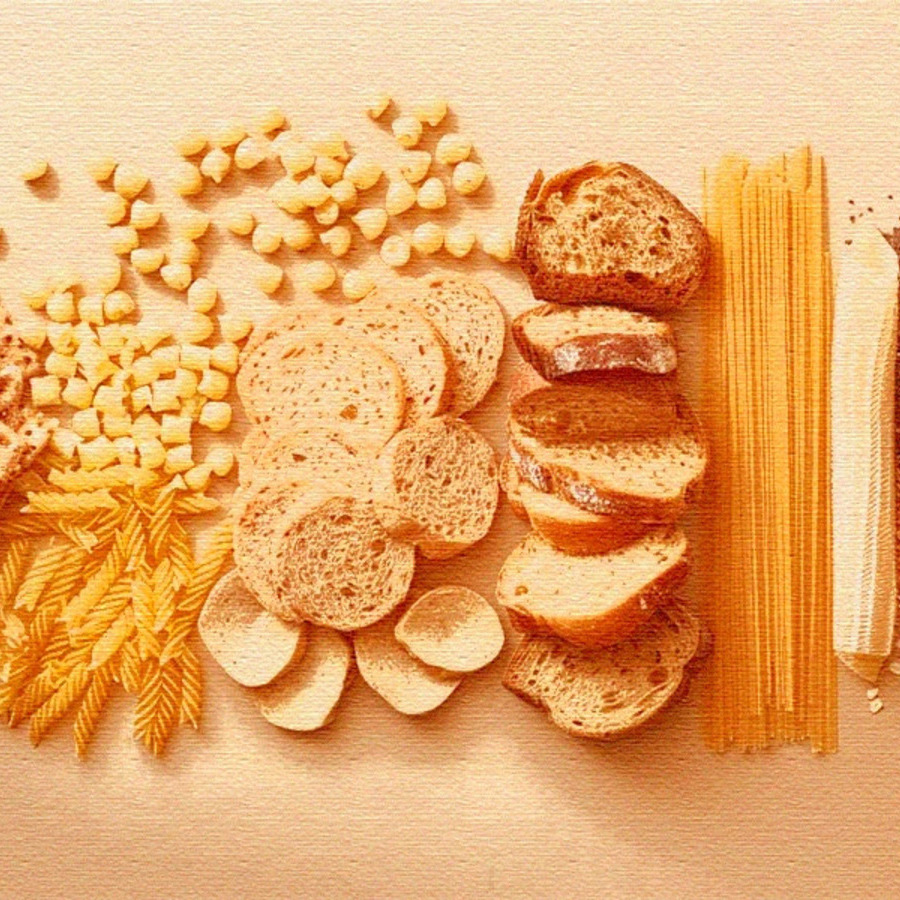
The first thing to understand is that carbohydrates are not just bread or pasta. They are a whole class of nutrients found in a wide variety of foods.
Carbohydrates are found in:
In other words, a bowl of lentils and a candy bar both contain carbohydrates, but they affect your body in completely different ways.
After digestion, most digestible carbohydrates are broken down into simple sugars. Your body uses them for energy or stores them as glycogen in the liver and muscles for later use.
The short answer is yes—but there’s an important catch.
Your body can produce glucose on its own from fats, amino acids and other compounds. This process is called gluconeogenesis.
That’s why people can survive for some time on a very low-carb diet.
But just because your body can compensate for a lack of carbohydrates doesn’t mean eliminating them is beneficial.
It’s similar to saying that because a person can survive several days without food, food isn’t necessary. Clearly, that logic doesn’t hold up.
There are two popular myths about the brain and carbohydrates.
The first says that without sugar, your brain stops working.
The second claims your brain doesn’t need glucose at all.
The truth lies somewhere in between.
Under normal conditions, the brain primarily runs on glucose.
If carbohydrates are heavily restricted for a long period, the body produces ketones, and the brain gradually begins using them as an alternative fuel source.
This is a completely natural adaptation.
However, it doesn’t mean a ketogenic diet automatically improves memory, focus or mental performance.
During intense exercise, your body relies on glycogen—its stored form of carbohydrate—which acts like an energy battery for your muscles.
That’s why running, strength training or dancing quickly depletes glycogen stores.
When those stores are low:
Your body can adapt to moderate physical activity with fewer carbs, but for regular or intense training, carbohydrates often remain an important part of a balanced diet.
Many people don’t just cut out sweets—they also eliminate foods rich in fiber.
Along with whole-grain bread, fruit, legumes, vegetables and grains, they often remove one of the most valuable nutrients from their diet: dietary fiber.
And fiber is a carbohydrate too.
It helps:
So by eliminating “all carbs,” many people unknowingly remove one of the foundations of a healthy diet.
This is a perfect example of why calories alone don’t tell the whole story.
Both an apple and apple juice contain natural sugars.
But a whole apple also provides:
As a result, you eat it more slowly, stay full longer, and your body responds differently than it does to a glass of juice.
The same principle applies to many other foods.
The internet loves labeling foods as either healthy or unhealthy.
In reality, it’s much more useful to look at the entire food.
Less nutritious choices include:
More nutritious carbohydrate sources include:
They all contain carbohydrates, but their nutritional value is very different.
After eating a bowl of oatmeal, rice or a banana, blood sugar naturally rises.
That is a completely normal physiological response.
The pancreas releases insulin, cells absorb glucose for energy, and blood sugar gradually returns to a healthy range.
This process is not a “mini version” of diabetes.
The real concern is chronically elevated blood sugar caused by metabolic disorders—not the temporary increase that happens after a meal.
No diet leaves empty space.
When carbohydrates decrease, people usually eat more:
So the important question isn’t “Are carbohydrates bad?” It’s “What am I replacing them with?”
A diet rich in vegetables, legumes, nuts and healthy plant fats is very different from one where grains are replaced with processed meats and fatty cuts of meat.
Ketogenic diets have legitimate medical uses and are prescribed for certain health conditions.
That doesn’t mean they’re the best choice for every healthy person.
People respond differently to very low-carb eating.
Some feel great.
Others don’t.
That’s why keto shouldn’t be treated as the universal standard for healthy eating.
The answer here is simpler.
Your body needs glucose.
That doesn’t mean it needs candy.
Added sugar is worth limiting, especially when it comes from sugary drinks, desserts and ultra-processed foods.
But there’s no reason to fear the natural sugars found in fruit and berries.
The best strategy isn’t cutting out an entire food group—it’s choosing better-quality carbohydrates.
A balanced diet can include:
This way, your body gets not only energy, but also fiber, vitamins and essential minerals.
Are you a man?
Visit MEN'S CULT